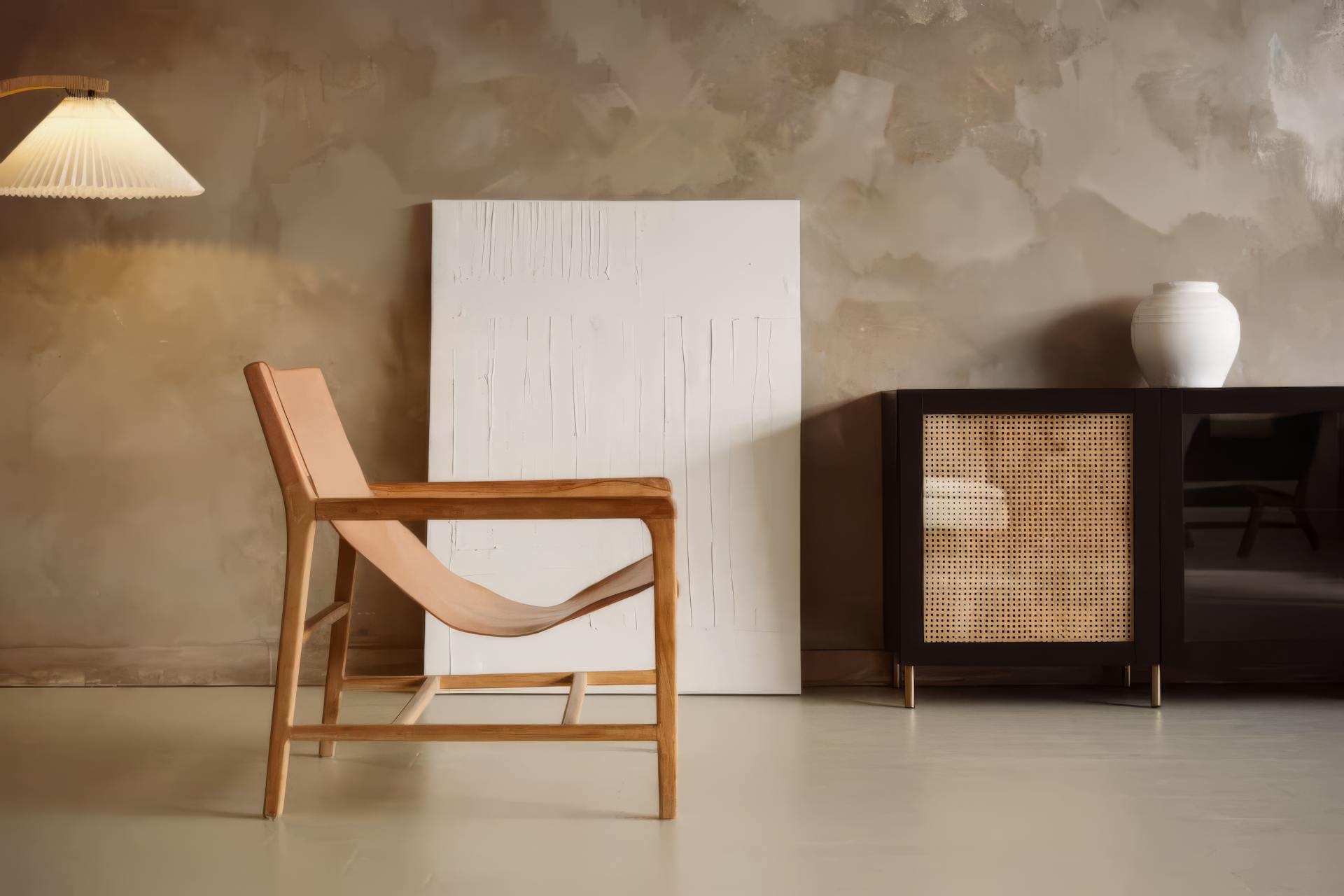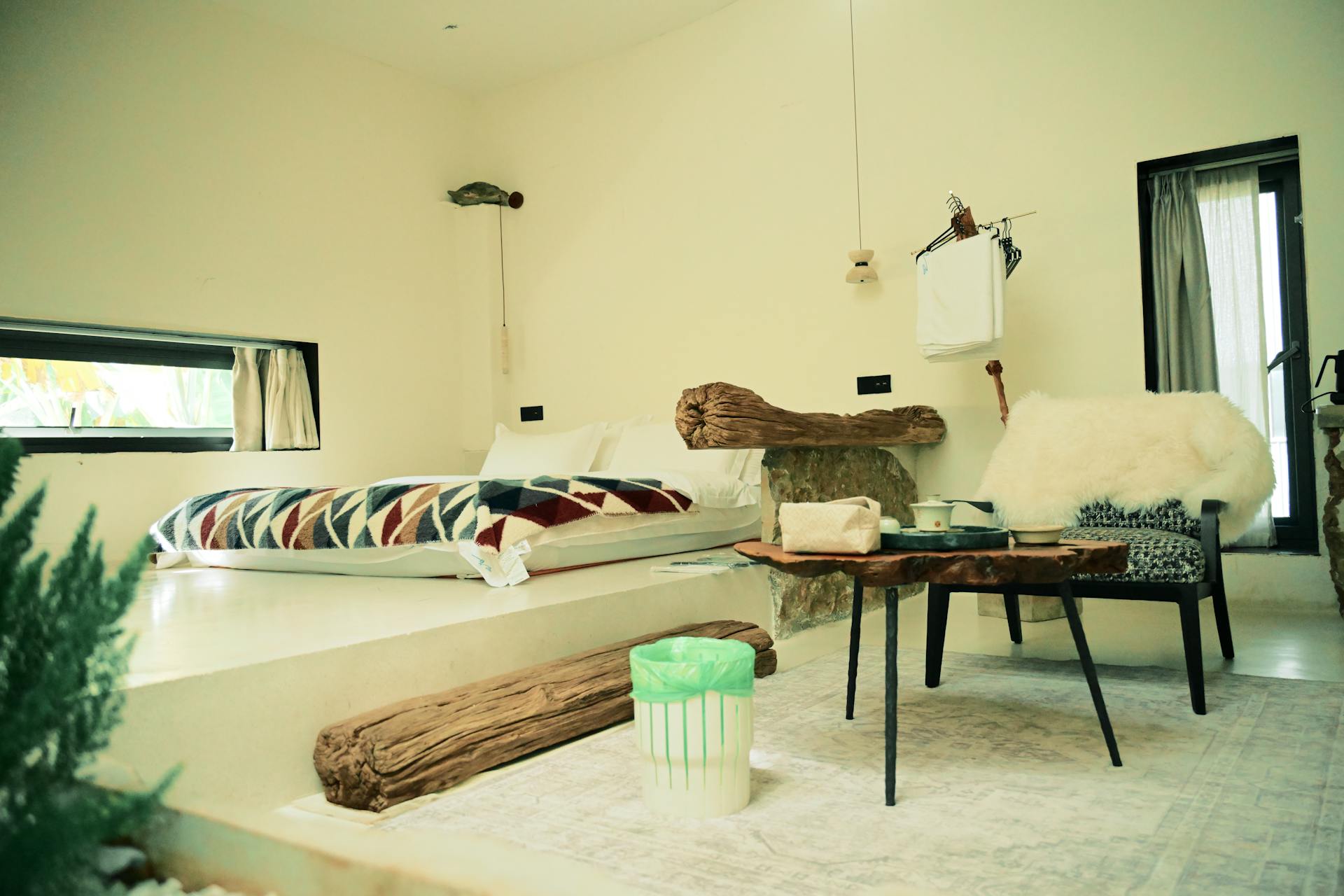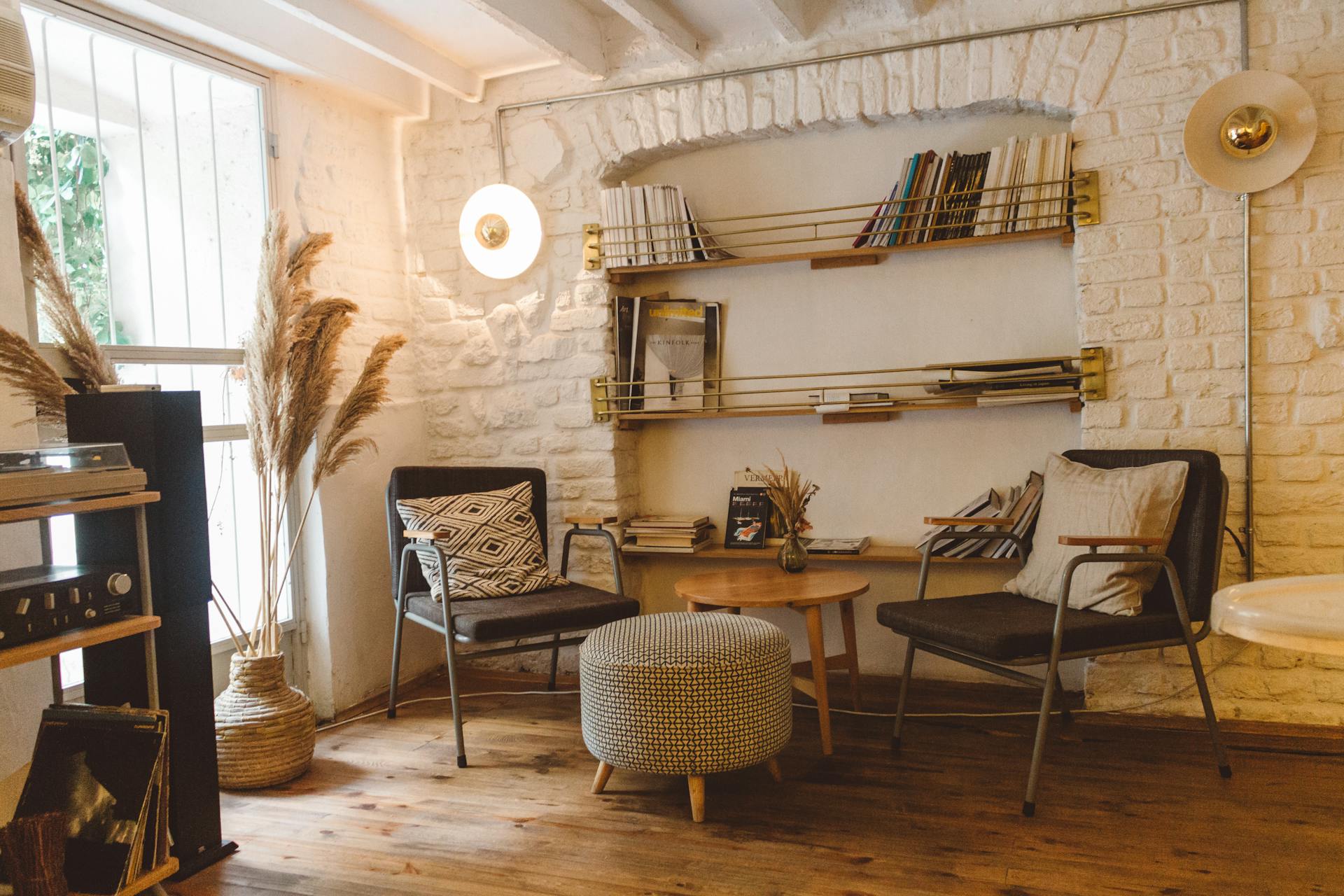
In every corner of the modern world, there’s a quiet but powerful awakening.
People are starting to look around their homes and ask: What is this space made of? Where did it come from? What will it leave behind?
This is not a question of fashion alone. It’s a question of conscience.
The “green interior” trend — the movement toward sustainable, eco-conscious design — is no longer a niche interest of environmental purists. It has become the moral and aesthetic frontier of interior design itself. In homes, offices, and public spaces, design is no longer judged only by beauty, but by responsibility: how it treats the earth that gave us the materials, and the people who will live among them.
In this article, we’ll explore this transformation in depth — not through the shallow lens of “eco décor tips,” but through a deeper reflection on materials, ethics, and emotion. Because choosing environmentally friendly materials isn’t merely an act of design. It’s an act of empathy.
I. The Moral Dimension of Materials
Every interior space tells a story. The texture of wood under your hand, the softness of fabric against your skin, the smell of a newly finished floor — these are not neutral sensations. They are traces of the materials’ origins, carrying invisible histories into our daily lives.
For decades, interior design was driven by surface appearance. Marble was prized for its luxury. Exotic hardwoods became symbols of wealth. Synthetic finishes promised convenience and low cost. The hidden price — environmental destruction, toxic emissions, and social exploitation — remained conveniently out of sight.
But today, people are beginning to feel that cost. Climate anxiety has turned abstract numbers into tangible unease. The beauty of a polished surface now seems hollow if it hides the destruction of a forest. The shine of a plastic finish feels cheap when one imagines microplastics drifting through the ocean.
Green interior design begins with a simple shift: to see materials not as inert matter, but as living participants in the cycle of life. A piece of bamboo flooring is not just a plank — it is a segment of a fast-growing grass that regenerated itself without depleting the earth. A chair made of reclaimed wood carries the soul of a tree that has already served its first life. A clay wall breathes with the rhythm of the natural world, absorbing moisture, regulating temperature, and reminding us that architecture can be alive.
Sustainability, then, is not a constraint on beauty. It’s a new kind of beauty — one that speaks not to vanity, but to harmony.
II. The Emotional Weight of Green Design
To live among natural, sustainable materials is to live in a gentler emotional climate.
The difference is subtle at first — a softer light, a calmer atmosphere, a sense of quiet balance — but it changes how we feel and behave.
Psychologists have long observed the restorative effects of natural textures and organic forms. Surfaces made from real wood, stone, or fiber carry irregularities — patterns that the human brain reads as “alive.” Synthetic materials, by contrast, are too perfect, too static. They tire the eye and numb the senses.
When you run your hand across a table made of reclaimed oak, there’s a tactile memory in it — the feel of wind, sun, and rain that shaped the tree over decades. That texture invites mindfulness. It grounds you.
Green design, in this sense, is not only about the planet — it’s about human well-being. A sustainable interior isn’t just one that reduces carbon emissions; it’s one that restores emotional equilibrium.
We live in a world of noise and speed. The home should not add to that frenzy. The home should heal it.
III. The Science of Sustainable Materials
Beyond the emotional and ethical layers, there is hard science supporting the green interior movement.
Let’s look at the materials themselves — what makes them “green,” and how to distinguish genuine sustainability from greenwashing.
1. Renewable and Rapidly Regenerative Materials
-
Bamboo grows up to 30 times faster than hardwood trees and regenerates after harvesting without replanting. It absorbs more CO₂ and releases more oxygen than most tree species, making it one of the most efficient materials for flooring, furniture, and even textiles.
-
Cork, harvested from the bark of cork oak trees, can be stripped without harming the tree, which continues to live for centuries. Cork is naturally antimicrobial, sound-absorbing, and resilient underfoot.
-
Rattan and seagrass are other rapidly renewable fibers that bring natural warmth to interiors while supporting local craftsmanship in tropical regions.
2. Reclaimed and Recycled Materials
Reusing what already exists is one of the most effective ways to reduce environmental impact.
-
Reclaimed wood not only conserves forests but also brings character and history to a space. Its weathered patina cannot be replicated by factory finishes.
-
Recycled metal, glass, and plastic composites are increasingly refined and durable, offering a second life to materials that would otherwise end up as waste.
-
Even textiles — from recycled PET bottles spun into yarn, to fabrics made of regenerated nylon (such as ECONYL) — are closing the loop in what was once a linear, wasteful system.
3. Low-Emission and Non-Toxic Finishes
A “green” material is meaningless if it off-gasses harmful chemicals once inside your home.
Modern eco-friendly finishes include:
-
Water-based paints and varnishes with low or zero VOC (Volatile Organic Compounds) content.
-
Natural oils and waxes, such as linseed oil, tung oil, or beeswax, which nourish wood without sealing it under plastic layers.
-
Clay or lime plasters that allow walls to breathe, regulating humidity and preventing mold.
4. Biocomposite Innovations
The cutting edge of sustainable design lies in biomaterials — substances grown rather than manufactured.
-
Mycelium (mushroom root) composites can replace plastics and foams for furniture and acoustic panels.
-
Hempcrete, a blend of hemp fibers and lime, serves as a lightweight, carbon-sequestering building material.
-
Algae-based paints and bioplastics are pushing the limits of renewable chemistry.
These innovations prove that sustainability doesn’t mean returning to the past. It means evolving forward — toward materials that are symbiotic with the planet rather than parasitic.
IV. The Cultural Rebirth of Craftsmanship
Something profound happens when we shift from industrial to sustainable materials: the revival of craft.
Mass production thrives on uniformity — every plank, every tile, every piece identical. Sustainable design, by contrast, embraces irregularity, imperfection, and the human hand.
Artisans working with reclaimed wood, natural stone, or handmade clay tiles produce work that bears the marks of touch and time. These materials cannot be faked or fully automated; they carry the soul of their maker.
This return to craft reconnects us with cultural memory. In Japan, the concept of wabi-sabi celebrates the beauty of imperfection. In Scandinavia, hygge values comfort and authenticity. In Vietnam, where bamboo and rattan have long been part of daily life, modern designers are rediscovering how indigenous wisdom already held the principles of sustainability centuries before the term existed.
Thus, green interiors are not just ecologically sustainable — they are culturally sustainable. They keep alive the stories of materials, hands, and traditions.
V. The Economics of Green Interiors
One common misconception is that sustainable materials are “luxury” items, accessible only to the wealthy. In reality, the economics of sustainability depend on perspective.
It’s true that some eco-friendly materials have higher upfront costs due to ethical sourcing and smaller-scale production. However, their life-cycle cost — measured in durability, health, and reduced maintenance — is often much lower.
For example, solid bamboo flooring can outlast synthetic laminates by decades. Natural wool rugs self-clean through lanolin, reducing chemical cleaning needs. Clay paint, unlike latex, doesn’t peel or trap moisture.
Furthermore, sustainable interiors often consume less energy overall. Natural light design, thermal mass walls, and breathable insulation create homes that live lightly — not only in carbon footprint but in utility bills.
The new economy of design, then, is one of stewardship, not exploitation. We are not consumers of materials; we are caretakers of their journeys.

VI. The Psychology of “Green” Aesthetics
Sustainability has a look — but it’s not limited to rustic wood and potted plants.
The “green aesthetic” of the 2020s is diverse and evolving. It can be minimalist or maximalist, Scandinavian or tropical, raw or refined. What unites it is not style, but ethos.
A sustainable interior radiates calm through authenticity. It avoids artificial gloss, preferring textures that tell the truth of their material. You can feel this difference intuitively:
-
A stone countertop feels honest; a plastic imitation feels loud.
-
A handwoven textile feels alive; a machine print feels flat.
-
A space that breathes with daylight feels human; one lit by fluorescent tubes feels mechanical.
When people enter such spaces, they often can’t articulate why it feels different — only that it feels right.
That “rightness” is the aesthetic of empathy — beauty that doesn’t dominate, but coexists.
VII. The Role of Designers and Homeowners
The green interior trend cannot thrive without collaboration between designers, manufacturers, and the people who inhabit the spaces.
Designers
Designers hold the power of specification — the ability to choose what enters a project. A truly responsible designer goes beyond visual taste to investigate sourcing, life-cycle analysis, and recyclability. They educate clients, challenge suppliers, and integrate sustainability as a default, not an add-on.
Manufacturers
Producers must commit to transparency. Labels like FSC (Forest Stewardship Council) for wood, Cradle to Cradle for product lifecycle, or GreenGuard for indoor air quality are not marketing badges but moral contracts.
Homeowners
Ordinary people have the most intimate influence — because a home is the ultimate vote. Every purchase, from flooring to furniture to paint, is a signal of values.
The shift begins with awareness: asking questions before buying, supporting local crafts, and choosing longevity over novelty.
A sustainable home is not one that looks “green.” It’s one that lives green — quietly, persistently, every day.
VIII. Challenges and Greenwashing
No movement is without its shadows. The rising popularity of eco-design has brought a flood of “greenwashed” products — materials marketed as sustainable with vague claims and no accountability.
“Eco-friendly,” “natural,” and “non-toxic” are not regulated terms in many markets. A product may contain 5% recycled content and still carry a green leaf logo. Some “bamboo” textiles are actually rayon produced through toxic chemical processes. Even “vegan leather” can be just plastic in disguise.
Thus, critical thinking becomes essential. The genuine green designer or homeowner learns to read certifications, study manufacturing methods, and seek transparency rather than slogans.
True sustainability is quiet, not flashy. It doesn’t need to shout because its integrity speaks for itself.
IX. The Future of Green Interiors
Where is this movement going next? The horizon of sustainable design is both technological and philosophical.
1. Circular Design
Instead of a linear “make–use–discard” model, the future lies in circularity — designing materials and products to be disassembled, repaired, and reabsorbed into new cycles. Furniture companies are experimenting with modular components and leasing models rather than ownership.
2. Biophilic Integration
Beyond materials, interiors are evolving to merge with nature — living walls, indoor gardens, daylight choreography, and natural ventilation systems that blur the boundary between inside and out.
3. Carbon-Negative Spaces
Advances in material science may soon enable interiors that don’t just reduce harm but actively heal the planet — walls that capture carbon, paints that purify air, floors that store renewable energy.
4. Cultural Sustainability
Designers are realizing that sustainability also includes social justice — fair wages, cultural respect, and preservation of local identities. The “green” home of tomorrow is not just environmentally sound but ethically complete.
X. Living the Philosophy
Ultimately, the green interior trend is not about what you buy, but how you think.
When you choose a chair, you’re not just choosing an object — you’re choosing a relationship with the earth.
When you paint a wall, you’re not just adding color — you’re shaping the air you breathe.
When you walk barefoot on a wooden floor, you’re feeling the memory of a living being that once stood tall in sunlight.
Every decision in design becomes a dialogue with nature. The more respectfully we speak, the more beautifully the world responds.
XI. Conclusion: Beauty as Responsibility
In an age of climate crisis, beauty cannot be innocent.
To design without conscience is to decorate the edges of a burning world.
But to design with conscience — to build homes and spaces that honor the cycles of life — is to participate in the quiet restoration of hope.
The green interior trend is not a fashion that will fade with seasons. It is the moral evolution of design itself. It reminds us that elegance is not measured by excess, but by empathy; not by what we take, but by what we give back.
When we choose materials that live lightly on the earth, we also lighten something within ourselves.
We rediscover the simple truth that every home, at its heart, is part of the planet — and that to care for one is to care for both.