In an age where environmental responsibility is no longer optional but essential, the furniture and interior design industry stands at a crossroads. Once celebrated solely for its artistry, luxury, and craftsmanship, the world of interiors now faces a new challenge — to harmonize beauty with sustainability. Among the guiding lights of this transformation is ISO 14001, the international standard for environmental management systems (EMS).
This standard does more than outline a checklist of compliance requirements. It represents a philosophy — a disciplined yet compassionate way of producing goods that honor both human creativity and the planet’s finite resources. The process of building interiors under ISO 14001 is not merely technical; it is a narrative of respect, restraint, and renewal.
In this article, we will explore in depth the entire process of producing ISO 14001-certified interior products, from the first sketch to the final polish, examining not just the “how,” but also the “why.”
1. Understanding ISO 14001: More Than Just a Standard
At its core, ISO 14001 provides a framework for companies to manage their environmental responsibilities in a systematic way. It focuses on reducing negative impacts, improving environmental performance, and ensuring compliance with laws and regulations.
But to view ISO 14001 as a bureaucratic hurdle would be to misunderstand its spirit. The real power of the standard lies in its integration of environmental consciousness into every decision and process. It is a mindset shift — from reaction to prevention, from consumption to stewardship.
For interior manufacturers, this means viewing every plank of wood, every piece of metal, every drop of varnish as part of a larger ecological web. Each material has a story before it enters the factory, and a legacy long after it leaves the showroom. ISO 14001 teaches companies to see those invisible threads — and to act with awareness.
2. The Philosophy of Sustainable Interior Production
Before diving into the technical steps, it’s essential to understand the underlying philosophy that drives ISO 14001 in interior production: environmental empathy.
Every space we inhabit — our homes, offices, restaurants, or hotels — reflects our relationship with the world. To build sustainably is to recognize that interiors are not isolated environments but microcosms of the Earth’s ecosystem.
This philosophy manifests in three guiding principles:
-
Harmony with nature: Use materials and methods that respect ecological balance.
-
Longevity over novelty: Design interiors that age gracefully rather than chase disposable trends.
-
Transparency and accountability: Make every stage of production traceable, measurable, and improvable.
With these ideals at heart, the ISO 14001 process transforms from a mere certification pursuit into an ethical commitment.

3. Step One — Environmental Policy and Leadership Commitment
The journey begins not on the factory floor, but in the boardroom. Leadership must first craft an Environmental Policy, a public declaration of the company’s environmental vision, goals, and values.
This policy is the soul of the ISO 14001 system. It expresses the organization’s promise to prevent pollution, comply with regulations, and continually improve environmental performance.
But a policy on paper is meaningless unless leaders embody it. A CEO who insists on recycled materials, who questions the carbon footprint of each supplier, who personally visits a wood plantation to ensure ethical sourcing — that is what turns words into culture.
True transformation begins when leadership sees sustainability not as a marketing angle but as a moral duty to future generations.
4. Step Two — Identifying Environmental Aspects and Impacts
Once the vision is set, the company must map out its environmental aspects — all the ways its activities interact with the environment.
For an interior manufacturer, this includes:
-
Energy consumption in machinery and lighting.
-
Waste from wood cutting and metal fabrication.
-
Emissions from paint, glue, and finishing processes.
-
Water usage in cleaning and cooling systems.
-
Noise pollution, packaging waste, and transportation emissions.
Each aspect has a potential impact — carbon emissions, chemical pollution, deforestation, or landfill waste. ISO 14001 requires organizations to evaluate, prioritize, and control these impacts based on their significance.
This stage demands brutal honesty. It is a mirror — and sometimes, the reflection is uncomfortable. But it is also the moment where responsibility begins. Recognizing one’s footprint is the first act of environmental maturity.
5. Step Three — Legal and Regulatory Compliance
Compliance under ISO 14001 is not a static checkbox but a living, breathing process.
Manufacturers must maintain a legal register — an updated list of all environmental laws, regulations, and permits relevant to their operations. This includes local waste disposal standards, air quality limits, chemical safety regulations, and timber sourcing laws such as FSC (Forest Stewardship Council) certification.
Beyond mere obedience, ISO 14001 encourages anticipation — staying ahead of upcoming regulations rather than reacting once they are enforced. It pushes companies to innovate voluntarily, not under pressure.
In a world where environmental expectations evolve rapidly, foresight becomes the most sustainable strategy.
6. Step Four — Setting Objectives and Environmental Programs
With impacts identified and compliance ensured, the next step is to set measurable environmental objectives.
For example:
-
Reduce electricity consumption by 10% within one year.
-
Eliminate solvent-based paints in all product lines.
-
Achieve zero waste to landfill by 2027.
-
Source 100% of wood from certified sustainable forests.
Each objective must be accompanied by a program — specific actions, timelines, and responsibilities.
These objectives are not abstract goals. They are commitments written into the daily rhythm of production: new equipment purchased, staff trained, waste bins re-labeled, lights automated.
The success of ISO 14001 lies in this practical, incremental improvement — the quiet revolution of small, consistent acts.
7. Step Five — Design and Material Selection
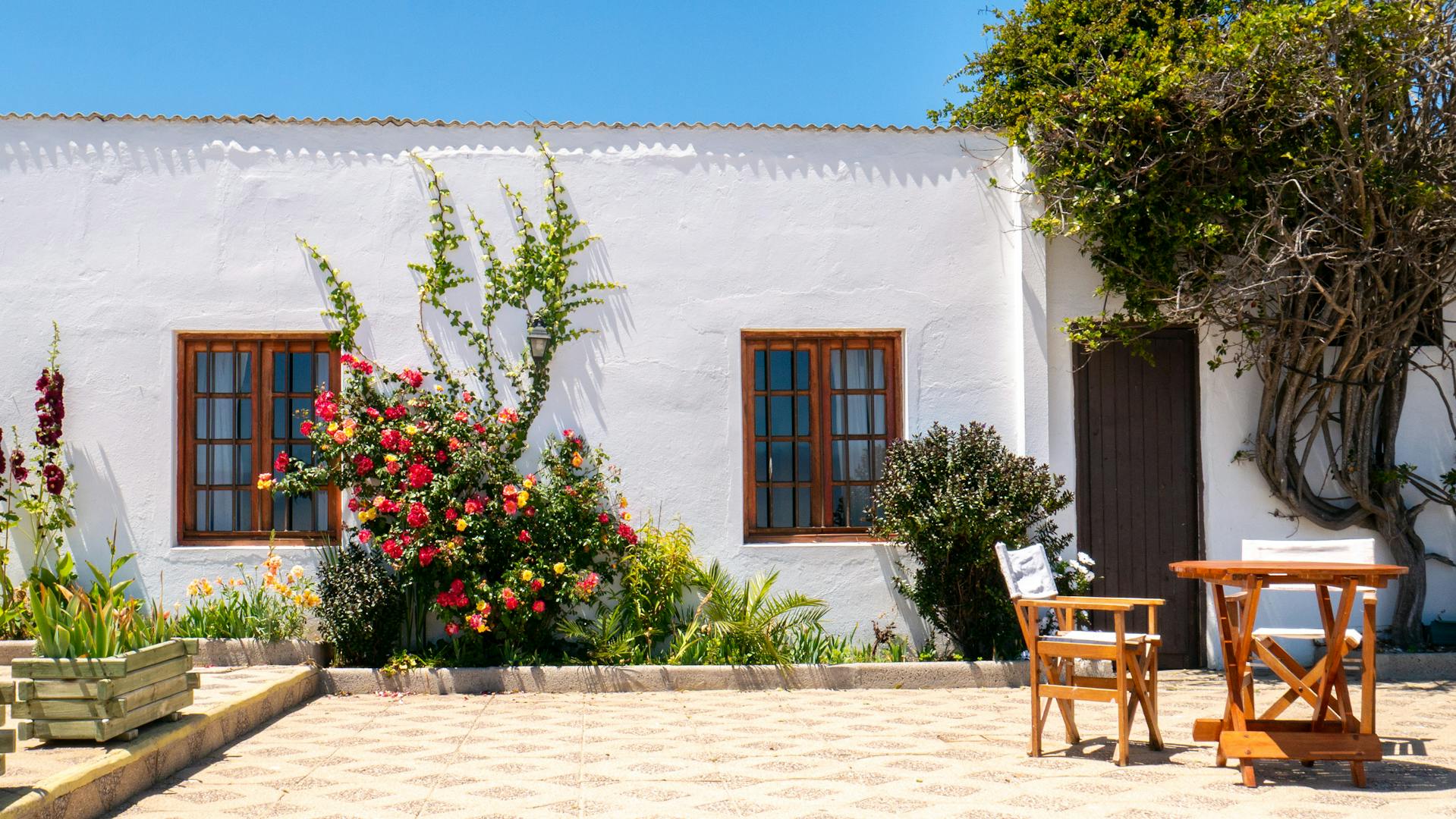
The design phase is where creativity and sustainability intersect most beautifully.
An ISO 14001-aligned design process asks the question:
“Can we achieve the same function and aesthetic with less environmental cost?”
This inquiry reshapes every decision:
-
Material selection: Opting for reclaimed wood, low-VOC (volatile organic compound) finishes, recycled metal, and natural fibers.
-
Design efficiency: Creating modular furniture that reduces waste and enables repair or repurposing.
-
Lifecycle thinking: Considering how materials will behave, age, and eventually return to the environment.
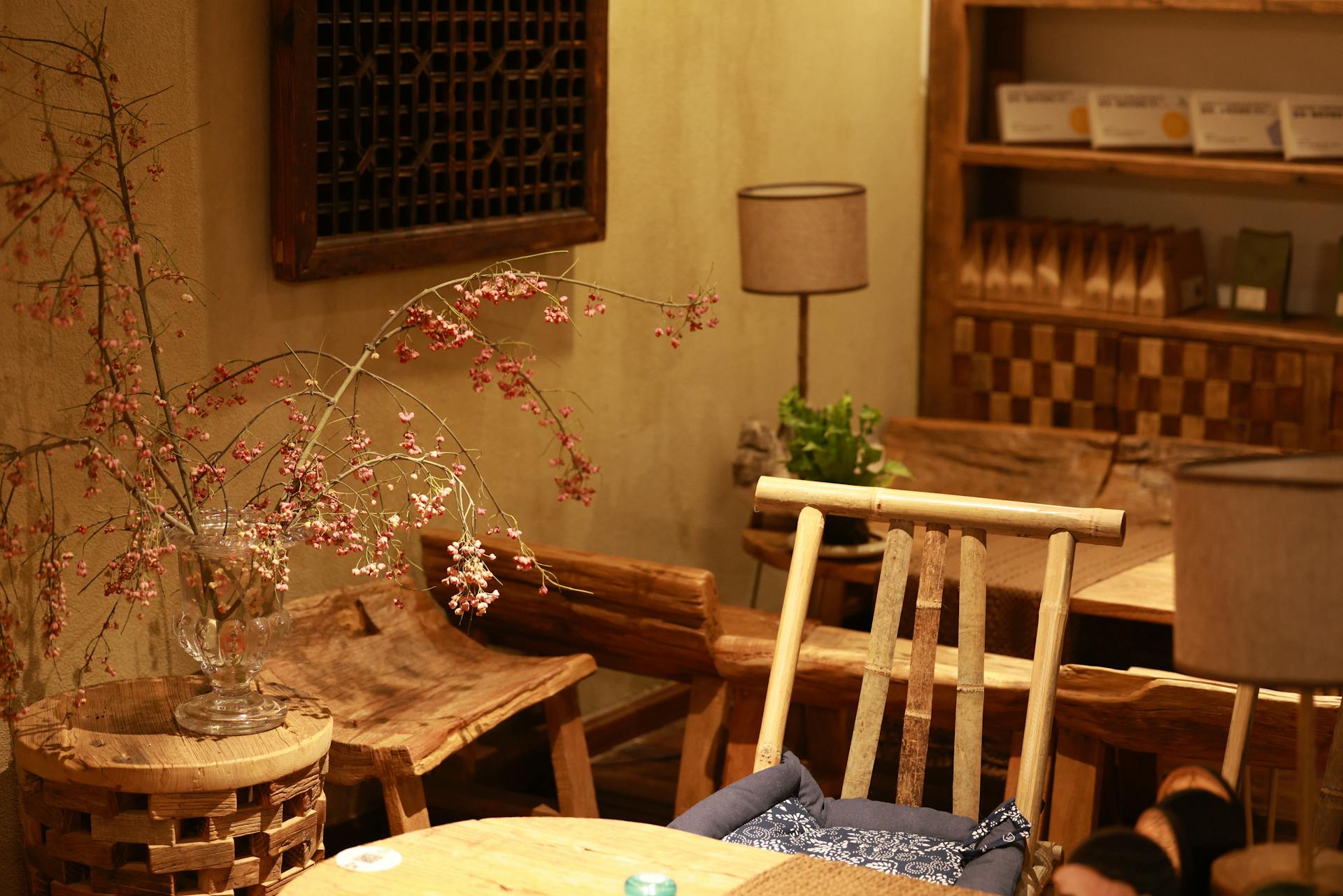
A sustainably designed chair is not just an object — it is a story of care, restraint, and respect. Each grain of wood carries the echo of a forest spared from excess logging; each joinery technique whispers of craftsmanship that endures longer than fashion.
8. Step Six — Supplier Evaluation and Green Procurement
Sustainability does not exist in isolation. A company is only as green as its supply chain.
ISO 14001 demands a rigorous process of supplier evaluation, ensuring that vendors and subcontractors share the same environmental commitment.
Manufacturers must assess suppliers based on:
-
Origin and certification of raw materials.
-
Energy efficiency of production.
-
Packaging and transportation methods.
-
Waste handling and chemical management.
Many companies develop a Green Procurement Policy, prioritizing eco-friendly suppliers even if it means higher upfront costs. Because the true cost of cheap materials is often hidden — in polluted rivers, exploited workers, and dying forests.
Every sustainable partnership, therefore, is a quiet rebellion against the culture of disposable commerce.
9. Step Seven — Production Process Optimization
The heart of ISO 14001 lies in process control — the daily discipline that ensures environmental goals are lived, not just proclaimed.
This includes:
-
Installing dust collection systems and filters to reduce air emissions.
-
Implementing energy-efficient lighting and machine scheduling.
-
Reusing wood offcuts or sawdust for biomass energy.
-
Switching to water-based adhesives and coatings.
-
Regularly maintaining machines to prevent leaks and energy waste.
Such steps may seem small, but collectively, they create a profound shift. They transform a factory from a place of consumption into a space of renewal — where every operation honors the resources it consumes.
When workers see waste bins labeled “Recycle — Respect the Wood,” they understand that sustainability is not an abstract policy; it is a shared moral rhythm.
10. Step Eight — Waste Management and Pollution Control
Waste is the mirror of inefficiency. ISO 14001 teaches companies to minimize, segregate, and recycle at every stage.
Wood dust can become biomass fuel. Metal scraps can be re-melted. Packaging can be redesigned for reuse. Even wastewater can be filtered and looped back into the system.
Pollution control also extends to air emissions. Switching to low-VOC coatings and capturing solvent vapors protect not just the environment but also the health of workers — the unsung artisans who breathe life into every piece of furniture.
Here, sustainability becomes compassion — a gesture of care for the people who shape our interiors and the world that sustains them.
11. Step Nine — Monitoring, Measurement, and Continuous Improvement
ISO 14001 is built on the Plan-Do-Check-Act cycle. After implementation, the company must continuously monitor performance:
-
Measuring energy and water usage.
-
Tracking waste reduction progress.
-
Auditing compliance with environmental policies.
-
Recording nonconformities and corrective actions.
These measurements are not about policing — they are about learning. Every deviation is an opportunity for refinement. Every improvement, a step closer to harmony.
The cycle never ends, because environmental excellence is not a destination — it is a discipline, a way of thinking that must be renewed daily.
12. Step Ten — Training and Awareness
An environmental management system is only as strong as the people who uphold it.
ISO 14001 requires that every employee understands their environmental role. From the designer choosing sustainable fabrics to the technician maintaining energy-efficient equipment — everyone contributes.
Training programs, workshops, and internal campaigns can transform sustainability from obligation into pride. When a craftsman knows that using a certain glue prevents groundwater pollution, his work gains a deeper meaning.
In such environments, sustainability becomes contagious — a shared culture rather than a corporate policy.
13. Step Eleven — Internal Audits and Management Review
To maintain ISO 14001 certification, companies must conduct regular internal audits and management reviews.
Audits evaluate whether processes align with the environmental policy and objectives. They uncover gaps, inefficiencies, or missed opportunities.
Management reviews, in turn, assess the system’s overall effectiveness, ensuring that leadership remains engaged and that the company continues to evolve with new challenges.
These reviews are not bureaucratic chores. They are moments of reflection — a reminder that the journey toward sustainability is a living process, requiring humility and vigilance.
14. The Human Side of Green Production
Beyond processes and audits, ISO 14001 brings something more profound to interior production: meaning.
In a world driven by speed and consumption, this system slows us down — invites us to think, to care. It reconnects the craftsman to the forest, the designer to the ecosystem, the consumer to the planet.
A chair produced under ISO 14001 is not just furniture. It is a silent testament that human artistry can coexist with ecological wisdom. It reminds us that progress need not mean destruction, and that industry can still honor the sanctity of nature.
15. The Emotional Impact on Consumers and Communities
Consumers today are awakening to the moral weight of their choices. When they buy a sustainable product, they are not merely purchasing an object — they are participating in a movement.
An interior crafted under ISO 14001 does not simply decorate a home; it tells a story of forests preserved, workers protected, and innovations born of conscience.
Communities surrounding sustainable factories also feel this ripple effect. Cleaner air, safer working conditions, and local sourcing all contribute to a healthier, more ethical economy.
Thus, ISO 14001 transcends the company itself — it becomes an act of social renewal.
16. Challenges and the Courage to Change
No transformation is without struggle. Implementing ISO 14001 demands investment, discipline, and a willingness to face uncomfortable truths.
Old habits die hard — especially in industries shaped by tradition and cost pressure. But every factory that takes this step demonstrates courage: the courage to reimagine success not in profit alone, but in legacy.
And that courage — quiet, patient, persistent — is what the Earth needs most from us today.
17. Toward a Future of Regenerative Design
The ultimate goal of ISO 14001 is not just to reduce harm, but to create benefit — to move from sustainability to regeneration.
Imagine interiors that actively improve air quality, furniture that composts at the end of its life, materials grown rather than mined. ISO 14001 lays the foundation for this vision by instilling the discipline, data, and mindset required to innovate responsibly.
Each company that embraces the standard contributes to a future where human design becomes an extension of natural intelligence — not its adversary.
Conclusion: Crafting with Conscience
To produce interior products under ISO 14001 is to practice a new kind of craftsmanship — one that unites precision with empathy, innovation with ethics.
Every process step — from environmental policy to waste management — is a chapter in a larger story: humanity learning to create without destroying.
In the end, ISO 14001 is not about certification plaques or competitive advantage. It is about integrity. It is the quiet promise that even in an industrial age, we have not forgotten how to care.
Because every table, every cabinet, every panel crafted with conscience carries within it a whisper of hope — the hope that one day, beauty and sustainability will no longer be separate, but synonymous.
And when that day comes, our interiors will not only reflect who we are — they will honor the world that allows us to exist at all.